How Parents Create Document Problems for Themselves and Their Children: Karina Duval's Story
Today I wanted to write about something completely different, but paid consultation changed all my plans in the middle of the day, because the topic raised by my visitor today is perhaps more interesting than the one I tried in vain to choose myself. Because no fantasy, even the richest one, can compete with the real problems that people face. And some of these problems are created for themselves, and even worse - for their children. That's what my story is about today.
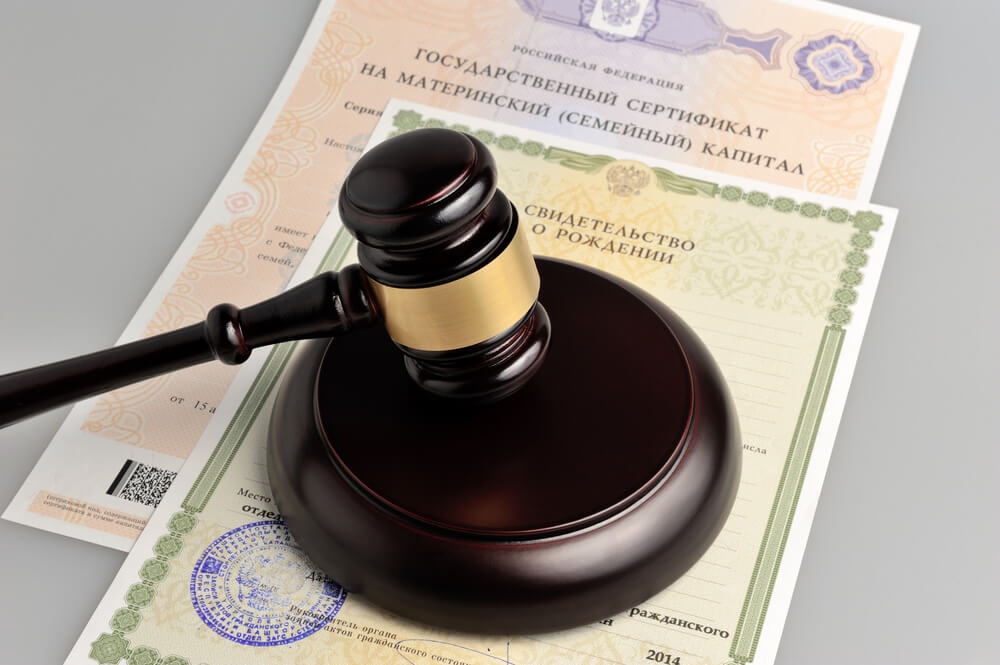
Photo: Shutterstock
Ksenia Ippolitova is not a single mother. She had a loving husband and beloved children in her life – a son and daughter born in a happy marriage in faraway Russia. But at some point, the family boat crashed either on the rocks or on everyday life – history is silent about what exactly served as the detonator, but divorce became inevitable.
Having divorced her once beloved husband, Ksenia decided to take her life into her own hands. First of all, she received a certificate of divorce under her maiden name. Yes, when registering a divorce, the applicant has a choice: to keep the surname acquired during marriage or return to the premarital one. And our heroine decided that she did not want to be connected to her ex-husband in any way, not even by surname, and returned to her maiden name - Egorova.
And then fate brought her to the USA. By the way, in order to leave for the United States with minor children, it is not at all necessary to obtain the consent of their father. The main thing here is to avoid disagreement, everything else can be resolved.
On the subject: Legal Myths That Make Our Lives Hard: Incredible Stories from Karina Duval
And so, having resolved the issues of obtaining a US visa and leaving the Russian Federation, our heroine found herself in New York. But even in New York, her hostility towards her ex-husband did not give her peace, and she wondered how to change her children's surname to her maiden name.
For some reason, she did not do this in Russia, although Article 59 of the Law of the Russian Federation “On Acts of Civil Status” allows this: “At the joint request of the parents, before the child reaches the age of fourteen, the guardianship and trusteeship authority, based on the interests of the child, has the right to allow the child to change his name, as well as change the surname assigned to him to the surname of the other parent.”
And even without the father's consent: "If parents live separately and the parent with whom the child lives wishes to give the child his or her surname, the guardianship and trusteeship authority shall resolve this issue depending on the interests of the child and taking into account the opinion of the other parent. Taking into account the opinion of the parent is not mandatory if it is impossible to establish his or her whereabouts, if he or she has been deprived of parental rights, has been declared incompetent, or if the parent evades the upbringing and maintenance of the child without good reason."
In this case, when the child’s surname changes, the corresponding changes are made to the birth certificate and a new birth certificate is issued (Article 63 of the Law of the Russian Federation “On Civil Status Acts”).
It is quite obvious that even if the heroine leaves the Russian Federation, her right to change her children's surnames is preserved. Especially since the father is now far away, and it will be difficult for him to resist this. But is it necessary?
Changing your first and last name abroad does not change the birth certificate or the birth certificate. Here is what the law says about it: “Changes to the records of civil status acts drawn up in relation to such persons by the competent authority of a foreign state in compliance with the legislation of the foreign state shall not be made.”
This means that instead of one birth certificate, the child will be forced to carry a stack of documents with him for the rest of his life and prove how he, so to speak, went from Petrov to Vasechkin. But does the child need this? And will he thank his mother years later? Personally, I am not sure about this.
Material prepared in partnership with
Karina Duval is a licensed legal consultant.
Russian registration: #78/857
NYS registration: 4775086
Notary public, registration: 02DU6376542
E-MAIL: [email protected],
Website:
https://karinaduvall.com/
https://sheepsheadbaynotary.com/
Google Business Profile: https://g.page/r/
Address: 1400 Ave Z, Office 502. Brooklyn. NY 11235
Karina Duval's books are available for purchase on Amazon:
Read also on ForumDaily:
What documents from your home country might you need in the US
Secrets of drawing up powers of attorney in the USA so that they are accepted in your home country
How to Accept an Inheritance from the USA in Russia: Advice from a Notary
Subscribe to ForumDaily on Google NewsDo you want more important and interesting news about life in the USA and immigration to America? — support us donate! Also subscribe to our page Facebook. Select the “Priority in display” option and read us first. Also, don't forget to subscribe to our РєР ° РЅР ° Р »РІ Telegram and Instagram- there is a lot of interesting things there. And join thousands of readers ForumDaily New York — there you will find a lot of interesting and positive information about life in the metropolis.





Editor's Choice