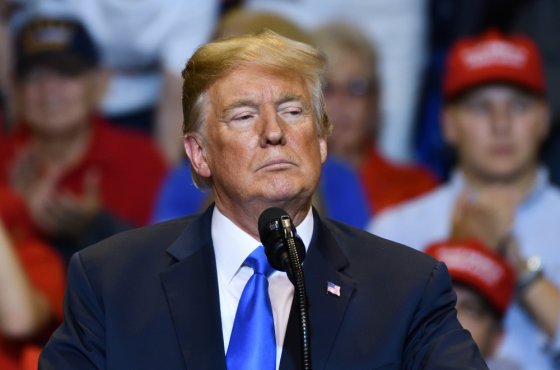
Elon Musk donated a quarter of a billion dollars to the Republican election campaign.

The world's richest man has become the most generous known donor of this election. He's trying to maintain the Republican majority in the Senate and is making the largest donations in the history of American politics, writes The New York Times.
Since early July, Elon Musk has been secretly sending money to Republican groups and his super-PAC (a political committee that raises money for campaign expenses. – Approx. Ed.) more than $276 million. He created a huge voter mobilization system to help the party in the difficult situation before the midterm elections.
The staggering sum makes Musk, the world's richest man, by far the largest known donor to the election.
To maintain the Republican majority in the Senate, Musk donated a total of $158 million this summer to the Senate Leadership Fund, the main super-PAC supporting the party's candidates, according to his team. This is one of the largest political donations in US history, exceeding the amount the Democrats raised from all their donors in the previous quarter.
On the subject: Many voters see the midterm elections as a vote against Trump, according to polling data.
Musk has built a powerful Republican voter mobilization system through the super-PAC America PAC, which he founded in 2024. He donated over $76 million to the group over the summer, and it spent the same amount on a massive door-to-door campaign to bring hard-to-reach Republican voters to the polls. The group is active in seven swing states and nearly three dozen districts where it's unclear who will win House seats.
Musk has already donated approximately $366 million to federal campaign committees during the 2025-2026 election campaign. This is significantly more than he spent in the 2024 elections, when he spent approximately $290 million to restore President Trump and the Republicans to power. According to people familiar with his donations, he contributed even more in both elections through undisclosed contributions.
This new influx of money has given the Republican Party a financial advantage in the midterm elections: in the final weeks before the vote, well-funded third-party groups, like Trump's powerful super-PAC, have been flooding the airwaves with ads. No Democratic billionaire spends anywhere near as much as Musk, and the lack of cash remains a major headache for Democrats, even though the political climate is otherwise favorable.
These donations also clarify how long Musk intends to remain in American politics.
"In terms of political spending, I will spend much less in the future," he said in May 2025.
Musk controls a vast business empire that has benefited from major federal contracts. He is famously unpredictable, often abandoning one project for another. Since his high-profile split with Trump last year, his political work has become much less visible. For several months, he wielded enormous influence in the White House, overseeing Trump's spending cuts, but then he became enraged by the president's key legislation and threatened to form a third party.
But relations between them have warmed again: in the last two weeks they have attended three events together and praised each other.
Musk has now donated over a quarter of a billion dollars to help Trump and the Republicans in the midterm elections. This money indicates his firm position on the right, making him a potential player in the 2028 presidential election.
In addition to the money he gave to his super-PAC and the Senate Leadership Fund, he gave smaller but still significant amounts to other conservative groups from July to September, his representatives said:
$20 million to the Congressional Leadership Fund, the main super-PAC for House Republicans;
$10 million — to Lone Star Liberty PAC, a group that supports Ken Paxton, the Republican Senate candidate from Texas;
$10 million - Republican Governors Association;
$2 million — Association of Republican Attorneys General.
“If Democrats take control of Washington in November and win key gubernatorial and attorney general elections, America risks becoming an ideology-obsessed socialist country. Woke "And borderless," said Andrew Romeo, a spokesman for America PAC. "These large investments have allowed the Republican Party apparatus to get its message across, and now Republicans have a real chance to defy history."
Betting on Paxton
Campaign materials are posted on doors across Texas with a stark warning: "Radical Democratic Socialists are winning elections across America. Could Texas be next?"
These doorknob cards are the work of Musk's organization, which is responsible for getting voters to the polls. Last week, it deployed nearly 3 paid canvassers across the country, according to America PAC.
The group spent most of its midterm election spending, which has already exceeded $76 million, on this door-to-door campaign. Smaller sums were spent on advertising, mailings, phone calls, and text messages. Many of the messages, some false, were aimed at Democrats.
This spring, Trump's political advisers asked Musk to replicate the grassroots voter outreach program America PAC ran in 2024, according to a person familiar with the conversation. While Republicans are facing a tough time, some party strategists believe such a program could decide the outcome of closely contested races.
America PAC relies on several firms to organize canvassing and compete fiercely with each other for contracts and staff, according to people familiar with the organization's work.
In this field, staff turnover is high. One campaigner working for America PAC said he was paid between $1,50 and $3 for every door he knocked on in the Texas heat. According to America PAC, the group has knocked on approximately 6,5 million doors nationwide to date.
Musk and his organization, according to people close to them, are particularly focused on the Senate elections in Texas. In large states like Texas, large-scale grassroots campaigns are rare; voters are more often reached through television advertising.
Musk lives in Austin and has extensive business interests and property in Texas. Paxton, the state attorney general, has investigated the activities of Musk's opponents, such as the liberal group Media Matters.
Musk's $10 million donation to Paxton's super-PAC came at a critical moment: his rivals were spending far more on their campaigns than the Republican candidate.
And the $158 million Musk gave to the Senate Leadership Fund (more than the super-PAC has ever received from a single donor in a quarter) may have allowed the fund to suddenly spend big on Paxton.
Musk's money arrived before the decision to launch an advertising campaign in support of Paxton was made in late August. Its budget now stands at $149 million.
Focus on transgender issues
As in 2024, Musk's organization is trying not to persuade undecided voters, but to register and bring to the polls people with conservative views—especially those who rarely vote.
It's much harder for Republicans to do that in the midterms when Trump isn't on the ballot.
To this end, Musk's super-PAC is banking on "culture wars," particularly around transgender people. (Musk's daughter, a transgender woman, has spoken about their conflicts over her identity, and he has implied that this is precisely what prompted him to become more involved in politics.)
Door-to-door canvassers in Texas are being told to criticize Democratic gubernatorial candidate Gina Hinojosa for her stance on transgender issues.
Likewise, Musk's organization leaves materials on doors claiming that James Talarico, the Democratic Senate candidate from Texas, has a "radical transgender agenda." And America PAC's main ad in that state, according to AdImpact, a media tracking company, condemns Talarico for his past comments that "God is non-binary."
Musk's group is also playing up the transgender theme in its attacks on other Democratic Senate candidates, including Josh Turek, the party's nominee in Iowa. Across the country, one of the super-PAC's most prominent Facebook ads features a man in makeup and the refrain, "He's got a plan to vote. What about you? Don't sit home while crazy people elect radicals." The group posts ads and sends emails on a variety of topics, but the main one is socialism. Musk's super-PAC constantly labels Democrats as socialists and links them to figures like New York City Mayor Zohran Mamdani and New York Congresswoman Alexandria Ocasio-Cortez.
The group even displays personalized messages online that mention the voter's name. For example, in a video featuring smiling Democrats: "Why are they smiling? Because Christopher hasn't made a plan to vote yet."
Much of this campaigning directs voters to the America PAC website, where conservatives can learn how to register to vote. The super-PAC promotes the so-called America Pass—a digital card in the Apple Wallet or Google Wallet app on a voter's phone that contains their registration information, as well as election dates and deadlines in their state.
Musk is spending big again and using some of the same tactics he used two years ago, but it's not 2024 anymore.
Politically, he's in a different position. He and Trump appear to be on good terms again (the president recently called him "our modern-day Thomas Edison"), but Musk has been keeping a low profile this election and doesn't seem as engaged as he once was.
In private conversations with friends, he rarely mentioned the midterm elections or a Trump presidency, according to people who have spoken with him in recent months. They say he's focused on his business, and he and his closest business associates have reduced their involvement in America PAC and delegated important decisions to Chris Young, Musk's top adviser.
And on X, a social media platform that's not a completely reliable indicator of what the billionaire is thinking, Musk has written only seven posts about candidates in swing states and districts this year, according to the Times. This pales in comparison to his relentless calls to elect Trump throughout 2024. Five of those posts were about Talarico, and one appeared to criticize Senator Susan Collins, a Republican from Maine.
There are also no more campaign trips for Musk to speak in cities, like the ones he made in Pennsylvania in October 2024 or the Wisconsin judicial election in the spring of 2025. Nor are there any more giveaways where he personally handed out a giant $1 million check to some registered voters who signed a petition. This scheme was challenged in court.
You may be interested in: top New York news, stories of our immigrants and helpful tips about life in the Big Apple - read it all on ForumDaily New York
This time, Musk apparently fell in love with no candidate as much as he did with Trump. The closest he came was when he donated $10 million to a Republican running for a U.S. Senate seat from Kentucky, who had little chance of winning. That investment turned out to be a failure.
The $276 million figure, of course, is only what's publicly known. Musk, among other things, made several seven-figure donations to midterm candidates through groups that aren't required to disclose their donors, a source familiar with the matter told the publication.
Read also on ForumDaily:
Republicans are removing Trump's name and photos from their campaign websites.
Trump's advisers helped a pro-Russian party win elections in Serbia.
'It will be a small price to pay': Trump is not opposed to Iran destroying Los Angeles and San Diego
Subscribe to ForumDaily on Google NewsDo you want more important and interesting news about life in the USA and immigration to America? — support us donate! Also subscribe to our page Facebook. Select the “Priority in display” option and read us first. Also, don't forget to subscribe to our РєР ° РЅР ° Р »РІ Telegram and Instagram- there is a lot of interesting things there. And join thousands of readers ForumDaily New York — there you will find a lot of interesting and positive information about life in the metropolis.



Editor's Choice